
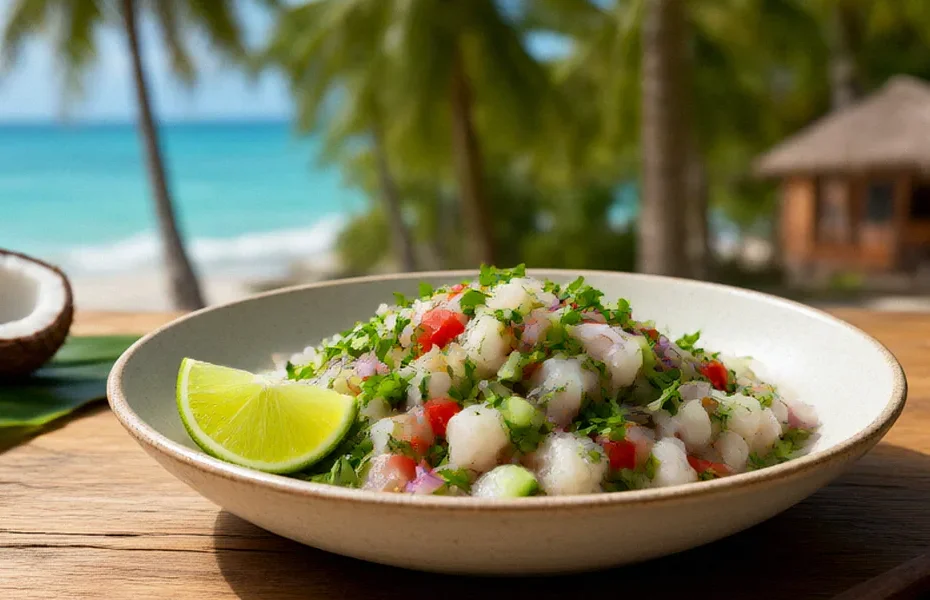
Poisson Cru: Tahiti’s National Dish and the Soul of French Polynesia
The boat rocks gently as our guide lifts a bowl from the cooler. Inside, cubes of raw tuna glisten, suspended in a pale coconut-lime dressing flecked with cucumber and tomato. We spear a piece with a fork, and the first bite lands like a small revelation: bright citrus, cool creaminess, the clean taste of fish that was swimming in this lagoon hours ago. This is poisson cru, and within minutes of tasting it on a Bora Bora lagoon tour, we understand why it’s called the edible heart of French Polynesia. It’s not just lunch. It’s the islands on a plate.
What Is Poisson Cru? A Taste of Tahiti
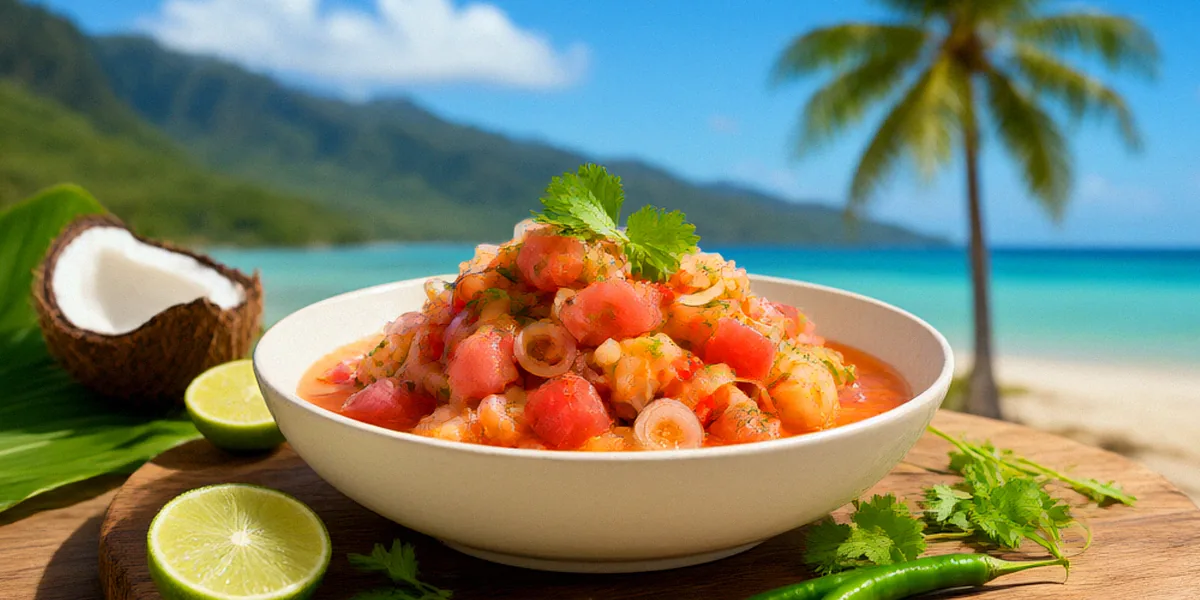
Poisson cru — literally “raw fish” in French — is French Polynesia’s national dish. It’s made by marinating cubes of raw fish in freshly squeezed lime juice, then folding in coconut milk along with cucumber, tomato, onion, and a little salt. Visitors often call it “Tahitian ceviche,” and the comparison makes sense up to a point. Like ceviche, the acid in the lime lightly “cooks” the fish, firming the flesh and turning it opaque at the edges. But where Latin American ceviche leans on chilli, coriander, and sometimes tomato, poisson cru takes a distinctly Polynesian turn with rich, sweet coconut milk. The result is softer, creamier, and gentler than most ceviche you’ve tried.
The Role of Lime and Coconut Milk
The magic of poisson cru lives in its two-ingredient dressing. Lime juice does the work of both flavouring and lightly curing the fish — it needs only minutes, not hours. Coconut milk, pressed fresh from mature coconuts in the traditional way, then balances the acidity with a round, tropical sweetness. In French Polynesia, the coconut milk is often made by hand: grated coconut flesh squeezed through muslin with a little water. The ratio matters — too much lime and the dish turns sharp, too much coconut and it becomes heavy. Done right, it’s one of the most refreshing things you can eat in the tropics.
Fresh Fish: Tuna, Mahi-Mahi, and More
The fish itself is almost always yellowfin or skipjack tuna, caught the same day and cut into bite-sized cubes. Mahi-mahi and wahoo also appear, and on some motu picnics you’ll find parrotfish or grouper. What matters is freshness. In the islands, fishing boats return each morning, and poisson cru is often made within hours of the catch. That immediacy is why the dish tastes so different in Bora Bora than almost anywhere else — and why our team always tells Australian travellers to try it at least once on the water, not just in a restaurant.
The Cultural Roots of Poisson Cru in Polynesian Life
Poisson cru isn’t a restaurant invention. It grew out of traditional Polynesian fishing culture, where the day’s catch was eaten raw with whatever the land provided — lime, coconut, and vegetables. Before refrigeration, marinating fish in lime and coconut was both a preservation technique and a way to honour the ocean’s gift. Today it remains a staple of everyday family meals, Sunday lunches, and communal feasts. It’s served alongside uru (breadfruit), taro, and rice, and it’s considered poor form to let a guest leave hungry.
From Ancient Fishing Canoes to Modern Tables
Long before Europeans arrived, Polynesian fishermen ate their catch raw, seasoned with seawater, lime, and coconut. The technique spread across the islands of French Polynesia, and each archipelago developed its own variation. In the Tuamotus, you’ll find poisson cru made with lagoon fish and sometimes a touch of chilli. In the Society Islands, including Bora Bora and Tahiti, tuna dominates. What hasn’t changed is the philosophy: catch it fresh, prepare it simply, share it generously.
Poisson Cru at Tahitian Festivals and Mahu Feasts
At the Heiva i Tahiti — the islands’ biggest cultural festival, held each July — poisson cru appears at nearly every food stall. It’s also central to the traditional mahu feast, a communal meal where families gather to celebrate weddings, births, and important milestones. The dish is typically prepared in large bowls and passed around, each person serving themselves. If you’re lucky enough to be invited to a Polynesian family gathering during your trip, poisson cru will almost certainly be on the table.
Where to Try the Best Poisson Cru on Your Bora Bora Lagoon Tour
You can eat poisson cru in dozens of places around Bora Bora, but the best versions are tied to the water. Many full-day lagoon tours include a traditional lunch on a private motu (islet), and poisson cru is nearly always the centrepiece. Tour operators like Lagoonarium and Bora Bora Blue Lagoon Tours serve it fresh, often prepared on the spot while you snorkel nearby. Australian travellers frequently book these full-day experiences precisely because the meal is included — and it’s worth it.
Motu Picnics: Poisson Cru with a View
The classic Bora Bora experience is a motu picnic: you arrive by boat at a private islet, tables are set under palm trees, and lunch appears — grilled fish, fresh fruit, and a big bowl of poisson cru. The fish was likely caught that morning by your guide or a local fisherman. You eat with your feet in the sand and the lagoon at your back. It’s the single best way to understand why this dish belongs to this place.
Bloody Mary’s and Vaitape Food Trucks
On land, two spots stand out. Bloody Mary’s on Bora Bora is a famous restaurant known for fresh poisson cru — it’s been a celebrity haunt for decades, and the dish is a menu staple. For something more affordable, head to the roulottes (food trucks) in Vaitape, Bora Bora, where locals and travellers alike line up for generous bowls at reasonable prices. Both are worth visiting, but for different reasons: Bloody Mary’s for the atmosphere, the roulottes for the everyday authenticity.
How to Make Poisson Cru: A Simple Recipe for Australian Kitchens
You don’t need to be in Bora Bora to make poisson cru. With good fish and a few pantry staples, it’s one of the easiest dishes to recreate at home. We’ve made it many times in Australian kitchens, and the results are consistently excellent — provided you start with genuinely fresh fish.
Ingredients and Substitutions for Australian Shoppers
Here’s what you’ll need for four servings:
- 500g sashimi-grade tuna, cut into 1.5cm cubes — Australian travellers can find excellent sashimi-grade tuna at Sydney Fish Market, or ask your local fishmonger
- 4–5 limes, freshly squeezed (about 120ml juice)
- 200ml coconut milk — readily available at Woolworths and Coles
- 1 cucumber, peeled, seeded, and diced
- 2 tomatoes, seeded and diced
- 1 small red onion, finely sliced
- Salt and freshly ground black pepper
- Optional: a small handful of fresh coriander or mint
Step-by-Step Method and Serving Suggestions
- Place the tuna cubes in a non-reactive bowl and pour over the lime juice. Toss gently, then refrigerate for 10–15 minutes. The fish should turn opaque at the edges but remain tender inside.
- Drain off about half the lime juice — you want the flavour, not a pool of liquid.
- Add the coconut milk, cucumber, tomato, and onion. Season with salt and pepper. Stir gently to combine.
- Refrigerate for another 10 minutes to let the flavours meld.
- Serve immediately, ideally in chilled bowls, with rice, breadfruit, or simply on its own.
If you can’t find sashimi-grade tuna, fresh kingfish or trevally work well. Avoid any fish that isn’t explicitly labelled sashimi-grade — freshness is non-negotiable here.
Poisson Cru and Polynesian Culture: More Than a Dish
Poisson cru is more than food. It carries Polynesian values of sharing, freshness, and respect for the ocean. Every bowl is a small statement: the fish was caught locally, prepared simply, and meant to be eaten together. Understanding the dish deepens your appreciation of French Polynesian culture, whether you’re on a lagoon tour, at a family feast, or cooking it in your own kitchen back in Australia.
The Spirit of Sharing in Polynesian Meals
In Polynesian culture, meals are communal. Food is placed in the centre of the table and shared, not plated individually. Poisson cru fits this perfectly — it’s served in one large bowl, and everyone helps themselves. There’s no ceremony, no formality, just the expectation that you’ll eat well and often. When you’re invited to share poisson cru, you’re being welcomed into that tradition.
Respecting the Ocean: Sustainability and Freshness
Polynesian fishing traditions are built on respect for the sea. Fishermen take what they need, use the whole catch, and never waste. Poisson cru honours that ethic: it demands the freshest fish, prepared with minimal intervention. When you eat it in Bora Bora, you’re tasting a culture that has lived in balance with the ocean for thousands of years. That’s worth remembering with every bite.
Frequently Asked Questions
Is poisson cru safe to eat for travellers?
Yes, when it’s made with fresh, sashimi-grade fish and consumed shortly after preparation. On Bora Bora lagoon tours and at reputable restaurants, the fish is caught and prepared the same day. If you have a compromised immune system or are pregnant, check with your doctor first — the same advice that applies to any raw fish dish.
What does poisson cru taste like?
It’s bright, creamy, and refreshing. The lime gives a clean citrus tang, the coconut milk adds sweetness and richness, and the fish itself tastes mild and clean. The vegetables add crunch. Most first-timers describe it as lighter and less acidic than ceviche.
Can I make poisson cru with frozen fish?
We don’t recommend it. Freezing changes the texture of the fish, and the dish depends on that firm, fresh bite. If you must, use fish that was frozen at sea and thawed carefully, but fresh sashimi-grade tuna from a reputable fishmonger is far better.
Where can Australians buy sashimi-grade tuna for poisson cru?
Sydney Fish Market is the best-known source, with several retailers selling sashimi-grade tuna daily. Outside Sydney, ask your local fishmonger for sashimi-grade yellowfin or skipjack tuna, and specify that you’re eating it raw. Coconut milk for the recipe is available at any Woolworths or Coles.
Is poisson cru served on all Bora Bora lagoon tours?
Most full-day lagoon tours include a motu picnic with poisson cru, but not all. Check the tour description before booking, or ask the operator directly. Tours run by Lagoonarium and Bora Bora Blue Lagoon Tours typically include it as part of their lunch spread.
Poisson cru is a gateway. It’s the first dish many travellers taste in French Polynesia, and it’s often the one they remember longest. Whether you’re eating it on a motu picnic during a Bora Bora lagoon tour or making it at home with tuna from Sydney Fish Market and coconut milk from Woolworths, you’re connecting with a culture that values freshness, generosity, and the ocean. Try it on your next trip — and then try making it yourself. You’ll understand the islands a little better with every bite.