
Snorkelling with Rays and Reef Sharks in Bora Bora: A Complete Guide
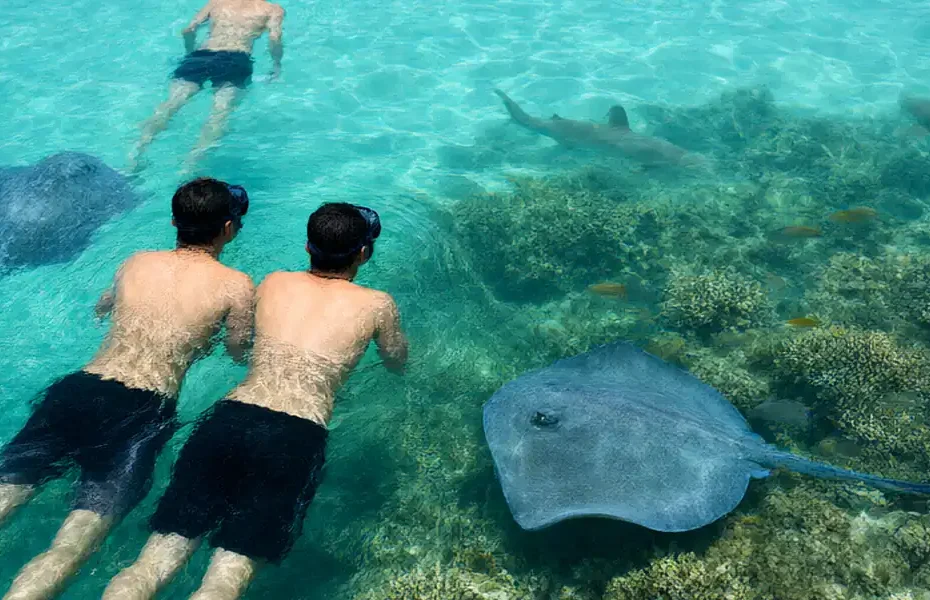
We remember the first time we slipped off the back of a boat into Bora Bora’s lagoon. The water was so clear it barely registered as water at all — more like floating in warm, blue-tinted air. Within seconds, a stingray the size of a coffee table glided beneath us, its wings rippling like fabric in a breeze. Then, a blacktip reef shark cruised past, maybe a metre and a half long, entirely unbothered by our presence. Our hearts hammered. Our masks fogged. And then we laughed, because the shark was clearly more interested in the reef than in us. That mix of awe and nerves is something every Australian traveller feels on their first lagoon tour. This guide covers everything we’ve learned since — the species, the tours, the culture, and the practical stuff you need to know before you book.
Why Bora Bora Is the Ultimate Lagoon Snorkelling Destination
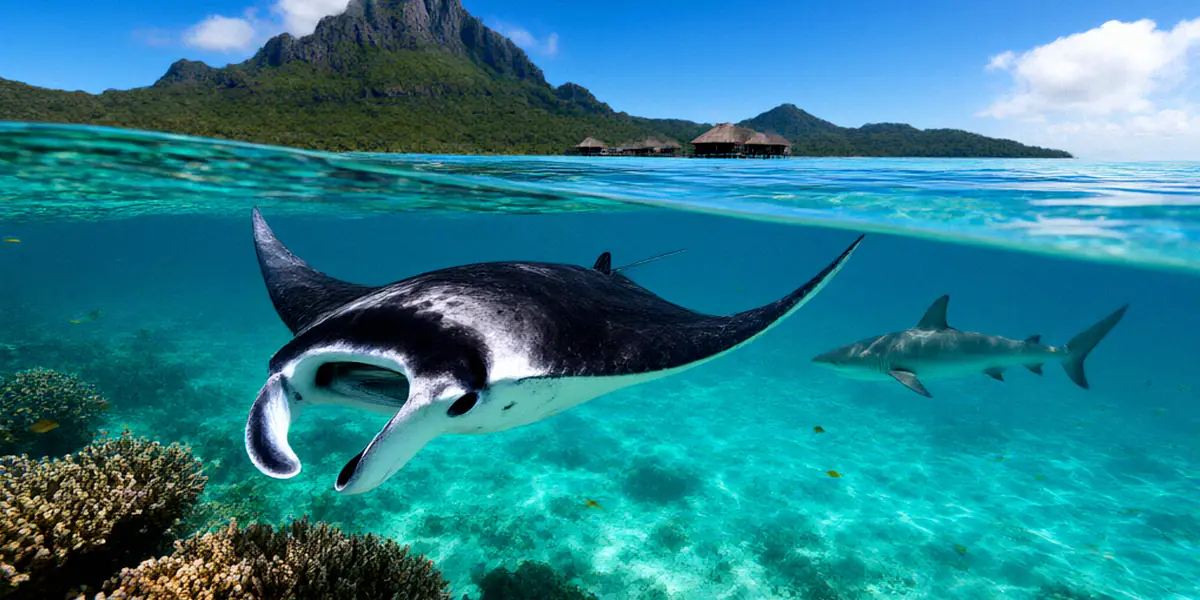
Bora Bora sits in the Society Islands of French Polynesia, roughly 230 kilometres northwest of Tahiti. The island itself is small — you can drive the whole ring road in about 45 minutes — but it’s wrapped in one of the most extraordinary lagoons on earth. A barrier reef encircles the island and its surrounding motu (small islets), creating a protected inner sea of roughly 78 square kilometres. That reef wall stops the ocean swell, which means the lagoon is calm almost year-round, even when the open Pacific is churning.
The visibility is the other headline. On a good day, you can see 30 to 40 metres down. That clarity comes from the lagoon’s sandy floor, low sediment runoff, and the constant flushing of tidal water through the reef passes. For snorkellers, it means you’re not peering into murk — you’re watching an entire coral city operate in high definition.
The Lagoon’s Unique Ecosystem
The lagoon isn’t one uniform habitat. It’s a patchwork of coral gardens, sandy flats, shallow channels, and deeper drop-offs near the passes. Different zones attract different species. The coral gardens are thick with parrotfish, butterflyfish, and surgeonfish. The sandy shallows are where you’ll find stingrays buried and waiting. The reef passes, where ocean water flows in, are the best spots for spotting eagle rays and the occasional manta. This variety is why a single lagoon tour can feel like three or four different dives stitched together.
Best Time of Year for Australian Travellers
French Polynesia’s dry season runs from May to October, which conveniently overlaps with the Australian winter. Water temperatures sit around 26–28°C, the trade winds keep things comfortable, and rainfall is lower. The wet season (November to April) brings warmer water, higher humidity, and more rain, but also fewer crowds and lower prices. Cyclone risk is low but not zero between December and March. From Australia, the most common routing is a flight to Auckland, then Air Tahiti Nui from Auckland to Papeete, followed by a short domestic hop to Bora Bora. Many Australians build in a stopover in New Zealand on the way, which breaks up the travel nicely.
What to Expect on a Bora Bora Lagoon Tour
Lagoon tours are the backbone of the Bora Bora visitor experience. Most run out of Vaitape, the main town, or from the resorts on the motu. The classic itinerary includes a circumnavigation of the island inside the lagoon, with stops at a coral garden, a shallow ray and shark spot, and a motu islet for lunch. Operators like the Lagoonarium and Bora Bora Blue Lagoon Tours have built reputations on small-group formats, local guides, and minimal wildlife disturbance. The Lagoonarium, in particular, doubles as a conservation and education site, with underwater viewing areas and a focus on letting marine life come to you rather than the other way around.
Half-Day vs Full-Day Tours
Half-day tours usually run three to four hours and cover two or three stops. They’re ideal if you’re short on time, prone to sun fatigue, or travelling with younger kids. Full-day tours stretch six to eight hours and typically include a motu lunch of grilled fish, poisson cru (raw fish in coconut milk and lime), fresh fruit, and sometimes a coconut-opening demonstration. We’d argue the full-day version is worth it — the extra stops and the unhurried pace make a real difference, and the lunch on a private motu is one of those memories that sticks.
What’s Included and What to Bring
Most tours provide snorkel gear, masks, fins, towels, and drinking water. Some include underwater cameras or GoPro rentals. What you should bring:
- Reef-safe sunscreen (more on this below — it matters)
- A rash vest or light wetsuit top for sun and sting protection
- Dry bag for phones and cameras
- Cash in Pacific Francs (XPF) for tips, snacks, and small purchases — ATMs are available in Vaitape but not everywhere else
- A hat and sunglasses for the boat rides
Snorkelling with Stingrays and Eagle Rays
Rays are the emotional centrepiece of most lagoon tours. They’re big, they move beautifully, and they have a habit of swimming directly at you before veering off at the last second. The stingrays in Bora Bora are habituated to humans — guides have been bringing snorkellers to the same sandy shallows for decades — but they are still wild animals. They’re not tame. They’re tolerant. That distinction matters, and good guides will remind you of it before you get in the water.
Stingray Species and Behaviour
The main species you’ll encounter is the pink whipray, often called the lagoon stingray locally, along with the larger black-blotched stingray. They rest on the sandy bottom, often partially buried, and will glide over to investigate if you stand still. Their barbs are defensive, not aggressive — injuries almost always happen when someone steps directly onto a buried ray. Shuffle your feet along the sand rather than lifting them, and you’ll give the ray plenty of warning to move. The Lagoonarium’s conservation work includes monitoring ray populations and educating visitors on handling-free interaction, which we think is the right approach.
Eagle Rays: The Gentle Giants
Eagle rays are a different experience entirely. They’re spotted, they have a distinctive duck-like snout, and they tend to cruise in the mid-water column rather than resting on the floor. Seeing one is a bit like watching a bird fly underwater — slow, deliberate, almost prehistoric. They’re shy compared to stingrays, so the best strategy is to stay still and let them pass. They often appear near the reef passes where the current brings in plankton.
Snorkelling with Reef Sharks: Safety and Ethics
Let’s be honest: the shark stop is the one that makes people nervous. It shouldn’t. Blacktip reef sharks are the most common shark species in Bora Bora’s lagoon, and they are generally timid. They grow to about 1.5 to 1.8 metres, they feed on small fish and crustaceans, and they have essentially no interest in humans. The sharks you’ll see on a lagoon tour are accustomed to snorkellers but not fed by them on reputable tours, which keeps their behaviour natural. Operators like Top Dive Bora Bora follow strict safety protocols: briefings before entry, defined viewing zones, and guides in the water at all times.
Shark Species You’ll See
Beyond blacktips, you may spot grey reef sharks near the passes and, occasionally, a lemon shark in deeper water. Nurse sharks turn up resting under coral ledges. None of these are considered dangerous to snorkellers who keep a respectful distance. The rule we follow: never chase, never corner, never touch.
Responsible Wildlife Interaction
Feeding sharks and rays is the single biggest ethical problem in lagoon tourism. It changes behaviour, creates dependency, and increases the risk of accidental bites when animals associate humans with food. We strongly recommend choosing operators who don’t feed wildlife, who limit group sizes, and who brief guests on how to behave. If a tour promises “sharks feeding” as a headline attraction, that’s a red flag.
Polynesian Culture and the Lagoon
The lagoon isn’t just a snorkelling site. For Polynesians, it’s a food source, a highway, a spiritual space, and a storehouse of story. Many guides on Bora Bora are descendants of families who have fished these waters for generations, and the best tours include time for them to share that knowledge. You’ll hear about traditional fishing methods, the names of reef passes, and the legends tied to specific motu and coral formations. This context transforms a snorkel trip into something closer to a cultural exchange.
Traditional Fishing and Taboos
Historically, lagoon fishing was governed by rahui — temporary restrictions on harvesting certain species or areas, enforced by chiefs and tied to seasonal cycles. The concept is essentially an ancient form of marine conservation, and it’s still referenced in modern French Polynesian fisheries management. Guides often point out which fish were traditionally reserved for ceremonies, which reef zones were off-limits during spawning, and how those rules kept the lagoon productive for centuries.
Legends of the Lagoon
One of the most told stories involves the god Hiro, who is said to have split the island of Bora Bora with his canoe, creating the deep pass at Teavanui. Other legends describe rays as guardians of the lagoon and sharks as ancestral spirits. Whether you take them literally or not, these stories shape how locals relate to the marine environment — and they’re a reminder that the lagoon has been loved and respected long before any of us arrived with a snorkel mask.
Practical Tips for Australian Travellers
Logistics for Australians are straightforward once you know the routing. Currency is the Pacific Franc (XPF), pegged to the euro. ATMs are available in Vaitape, but smaller motu and resorts may not have them, so carry cash. Australian passport holders can stay in French Polynesia for up to 90 days without a visa. Travel insurance should specifically cover snorkelling and boat-based activities — check the fine print, because some policies exclude water sports. And reef-safe sunscreen is strongly recommended to protect the coral ecosystem; oxybenzone and octinoxate are banned in some parts of French Polynesia and are best avoided entirely.
Getting There from Australia
The most common route is Sydney or Melbourne to Auckland, then Air Tahiti Nui from Auckland to Papeete, then a domestic Air Tahiti flight to Bora Bora. Total travel time is typically 12 to 16 hours depending on connections. Some travellers route via Los Angeles or Tokyo, but the Auckland option is the shortest and most popular for Australians.
What to Pack and Budget
Budget-wise, Bora Bora is expensive. Expect to pay between 8,000 and 15,000 XPF for a half-day lagoon tour and 15,000 to 25,000 XPF for a full-day tour with lunch. Accommodation ranges from pensions in Vaitape to overwater bungalows that cost more per night than a return flight. Pack light — swimwear, rash vest, reef-safe sunscreen, a dry bag, and a light long-sleeve layer for boat rides. Leave room in your bag for black pearls if that’s your thing.
Snorkelling with rays and reef sharks in Bora Bora is a privilege, not an amusement park ride. These animals are wild, the lagoon is a living ecosystem, and the culture that surrounds it deserves the same respect you’d give any host. We’d encourage every Australian traveller to book with operators who prioritise conservation, employ local guides, and treat wildlife as something to observe rather than perform. Do that, and you’ll come home with more than photos — you’ll come home with a genuine understanding of why this lagoon matters so much to the people who live beside it.
FAQ
Is it safe to snorkel with reef sharks in Bora Bora?
Yes, when you follow guide instructions. Blacktip reef sharks are the most common species in the lagoon and are generally timid. They’re not interested in humans as prey. Stay calm, keep a respectful distance, and never try to touch or feed them.
Do Australians need a visa for French Polynesia?
No. Australian passport holders can stay in French Polynesia for up to 90 days without a visa. You’ll need a valid passport with at least six months’ validity and proof of onward travel.
What’s the best way to get to Bora Bora from Australia?
Fly to Auckland, then take Air Tahiti Nui from Auckland to Papeete, then a short domestic flight to Bora Bora. Many Australians add a stopover in New Zealand to break up the journey.
What currency should I bring to Bora Bora?
The local currency is the Pacific Franc (XPF). ATMs are available in Vaitape, but it’s wise to carry cash for tips, small purchases, and places that don’t accept cards. Credit cards are widely accepted at resorts and larger tour operators.
Is reef-safe sunscreen really necessary?
Yes. Chemicals like oxybenzone and octinoxate damage coral and are restricted in parts of French Polynesia. Reef-safe mineral sunscreens are strongly recommended, and many tour operators now require them.