
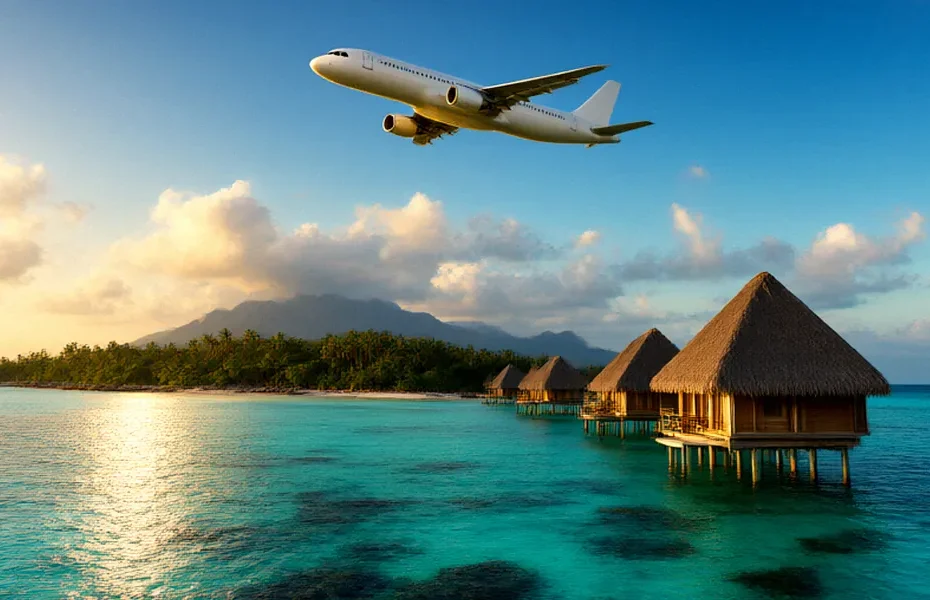
Getting to French Polynesia from Australia: Your Bora Bora Gateway Guide
Here’s the surprising truth that catches most Australians off guard: even though Bora Bora sits closer to us than it does to Paris, getting there takes more planning than a quick hop to Fiji or Bali. There are no direct flights from Sydney, Melbourne, or Brisbane to Papeete. That single fact shapes everything about how we plan a trip to French Polynesia — the routes we take, the budgets we set, and the island-hopping itineraries we build once we arrive. But once you understand the flight map, the visa rules, and the seasonal rhythms of the lagoon, Bora Bora becomes one of the most rewarding destinations an Australian traveller can choose.
Why French Polynesia Should Be on Every Australian’s Radar
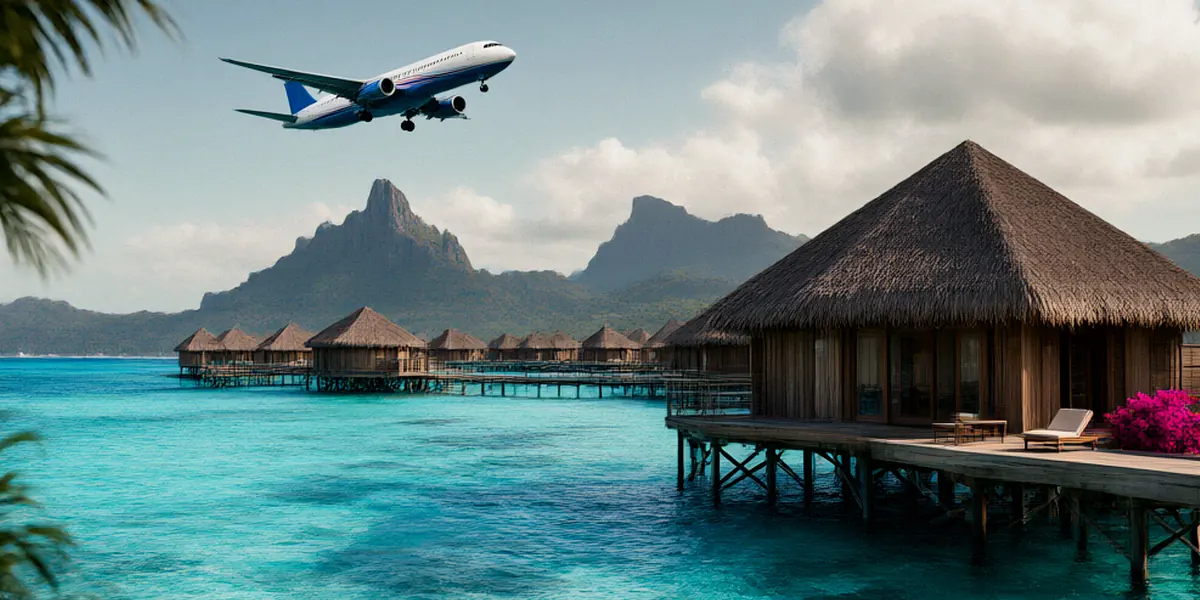
French Polynesia is spread across an area roughly the size of Europe, yet its total landmass is tiny. For Australians, it represents something genuinely different from our usual Pacific holiday. This isn’t Fiji’s coral coast or Samoa’s fale-lined villages — it’s a French overseas collectivity where baguettes, Bordeaux, and bilingual signage sit alongside ancient Polynesian marae (sacred stone sites). The culture here blends Tahitian traditions with two centuries of French administration, and that combination shows up in everything from the food to the architecture.
Bora Bora vs. The Islands We Usually Visit
We love Fiji and the Cook Islands, but Bora Bora operates on a different scale. The island’s famous lagoon is ringed by a barrier reef and a string of motu (small islets), creating water so clear that visibility regularly exceeds 30 metres. Where Fiji offers accessible, affordable resort holidays, Bora Bora leans premium — overwater bungalows, Mount Otemanu rising from the lagoon, and a sense of remoteness that’s hard to find closer to home. It’s a bucket-list destination rather than a repeat weekend escape, and we plan it that way.
The Allure of Polynesian Culture and Lagoon Tours
The cultural layer is what surprises most first-timers. Beyond the resorts, you’ll find outrigger canoe carving, tifaifai quilting, traditional dance performances, and guided lagoon tours led by locals whose families have fished these waters for generations. A good lagoon tour isn’t just snorkelling — it’s a chance to learn about ray feeding, black pearl farming, and the navigation traditions that let Polynesians settle this vast ocean centuries before Europeans arrived.
Flight Routes from Australia to French Polynesia
This is where the planning gets real. There is currently no non-stop service between Australia and Papeete, the capital of French Polynesia and the gateway to Bora Bora. Every route involves at least one connection, and understanding the options saves both money and transit time.
Direct Flights from Australia: What Actually Exists
As it stands, no airline flies direct from an Australian city to Papeete. Air Tahiti Nui operates flights from Auckland to Papeete, a common connection for Australians heading to French Polynesia, with a flight time of roughly five hours. That Auckland–Papeete leg is the backbone of most Australian itineraries. From Papeete, you’ll take a short domestic flight with Air Tahiti to Bora Bora — about 50 minutes — or to other islands like Moorea, Raiatea, or Taha’a.
Connecting Through Auckland or Los Angeles
Qantas and Air New Zealand offer codeshare flights from Sydney and Melbourne via Auckland, which means you can often book the entire journey under one itinerary. This is the route we recommend for most travellers: fly trans-Tasman to Auckland, connect to Air Tahiti Nui, then continue to Papeete. The alternative is routing via Los Angeles, which suits travellers combining French Polynesia with a US stopover but adds significant flight time and a US transit visa consideration (or ESTA eligibility). For a straightforward Bora Bora trip, Auckland is almost always the smarter connection.
Booking Tips for Australian Travellers
A few things we’ve learned from planning these trips:
- Book the Auckland–Papeete leg early — Air Tahiti Nui has limited frequency and seats fill fast during the dry season.
- Check whether your Qantas or Air New Zealand booking includes the Air Tahiti Nui segment, or whether you need a separate ticket.
- Leave a generous buffer in Auckland if you’re on separate tickets — a missed connection there is expensive to fix.
- Domestic Air Tahiti flights to Bora Bora should be booked alongside your international flights, as they also sell out in peak months.
Visa, Entry, and Health Requirements for Australians
Good news on the paperwork front: French Polynesia is one of the easier destinations for Australian passport holders, provided your passport is valid for at least six months beyond your return date.
Do Australians Need a Visa for French Polynesia?
No. Australian passport holders can stay visa-free in French Polynesia for up to 90 days. You’ll need proof of onward or return travel and evidence of sufficient funds for your stay, though this is rarely checked in depth. Because French Polynesia is a French overseas collectivity, the rules mirror Schengen-style entry requirements rather than standard French domestic rules — but the 90-day visa-free stay applies to Australians without any pre-approval needed.
Health and Travel Insurance Advice
No specific vaccinations are mandatory for entry from Australia, though routine vaccinations should be up to date. We strongly recommend comprehensive travel insurance that covers medical evacuation — French Polynesia’s outer islands have limited medical facilities, and serious cases are evacuated to Papeete or Auckland. Check that your policy covers water activities including snorkelling and lagoon tours, since some standard policies exclude them. Dengue fever is present in the region, so pack repellent, especially during the wet season.
Costs and Budgeting: What to Expect from Australia
Let’s be honest — Bora Bora is not a budget destination, and the flight routing adds cost compared to Bali or Fiji. But with careful planning, it’s more achievable than the brochures suggest.
Airfare Price Ranges from Major Australian Cities
Return airfares from Sydney or Melbourne to Papeete typically range from around AUD 1,800 to AUD 3,000 depending on season and how early you book. Add the Papeete–Bora Bora domestic return leg, which usually runs AUD 500–700. Booking six to nine months ahead, and travelling in the shoulder season, is where the biggest savings sit.
Daily Budgets for Bora Bora and Beyond
For context, a mid-range day in Bora Bora — guesthouse or modest hotel, meals at local restaurants, one activity — runs roughly AUD 400–600 per person. Overwater bungalow resorts push that well past AUD 1,500 per day. By comparison, Bali can be done comfortably on AUD 150–250 per day, and Fiji on AUD 250–400. French Polynesia sits at the premium end, but the experience is correspondingly different.
Saving Money on Lagoon Tours and Snorkelling
Lagoon tours in Bora Bora typically cost AUD 150–250 per person for a half-day excursion. To stretch your budget:
- Book tours directly with local operators rather than through resort concierges.
- Combine snorkelling and ray-feeding into one full-day tour instead of two half-days.
- Stay on the main island rather than a private motu — you’ll still access the same lagoon.
- Travel in the shoulder season for lower accommodation rates.
Best Time to Visit for Lagoon Tours and Snorkelling
Timing matters more here than in most Pacific destinations, because the lagoon experience changes noticeably with the seasons.
Peak Season vs. Shoulder Season
The dry season from May to October is best for snorkelling and lagoon tours in Bora Bora. Skies are clearer, water visibility peaks, and rainfall is minimal. July and August are the busiest and most expensive months, coinciding with European and Australian school holidays. May, June, September, and October offer the same conditions with fewer crowds and better rates — this is our preferred window.
Weather Patterns and Marine Life
The wet season runs November to April, bringing humidity, heavier rain, and occasional cyclones. That said, it’s also warmer, cheaper, and excellent for marine life — manta rays and humpback whales (July to October) are seasonal highlights. If you’re flexible and don’t mind afternoon showers, the wet season can be a rewarding trade-off.
Practical Tips for Australian Travellers
A handful of practical details make the trip smoother once you’ve landed.
Money, Language, and SIM Cards
The currency is the Pacific Franc (XPF), and credit cards are widely accepted in tourist areas — but carry cash for smaller islands, markets, and local tour operators. The official languages are French and Tahitian; English is common in resorts but less so in local villages, so learning a few phrases goes a long way. For connectivity, local SIM cards from Vodafone or Vini are available at Papeete airport and offer better value than Australian roaming.
Booking Lagoon Tours and Cultural Experiences
Book lagoon tours and cultural experiences before you arrive, especially between May and October. Popular operators fill weeks in advance, and the best cultural tours — those run by local families rather than large agencies — have limited capacity. Your accommodation can often arrange this, but we recommend researching and reserving directly to secure the experience you want.
FAQ
Do Australians need a visa to visit French Polynesia?
No. Australian passport holders can stay visa-free in French Polynesia for up to 90 days, provided your passport is valid for at least six months beyond your return date and you have proof of onward travel.
Are there direct flights from Australia to Bora Bora?
No direct flights exist. Most Australians fly to Auckland, connect to Papeete with Air Tahiti Nui, then take a short Air Tahiti flight to Bora Bora. Qantas and Air New Zealand codeshare flights from Sydney and Melbourne via Auckland make this easier to book as one itinerary.
What’s the best time of year for lagoon tours and snorkelling in Bora Bora?
The dry season from May to October offers the clearest water, best visibility, and most reliable weather for snorkelling and lagoon tours. May, June, September, and October balance good conditions with fewer crowds.
How much should we budget for a Bora Bora trip from Australia?
Return airfares from Sydney or Melbourne typically run AUD 1,800–3,000, plus AUD 500–700 for the Papeete–Bora Bora leg. Daily costs range from AUD 400–600 for mid-range travel to well over AUD 1,500 for luxury overwater bungalow resorts.
Is the Pacific Franc accepted everywhere, or should we carry cash?
The currency is the Pacific Franc (XPF), and credit cards are widely accepted in tourist areas. However, we recommend carrying cash for smaller islands, local markets, and independent tour operators who may not accept cards.
Planning a Bora Bora trip from Australia takes a little more effort than a standard Pacific getaway — there’s no direct flight, and the costs sit above Bali or Fiji. But that extra planning is exactly what makes it worthwhile. The lagoon tours, the Polynesian culture, and the sheer scale of French Polynesia’s beauty deliver an experience you simply can’t replicate closer to home. Start with the flights, lock in your dates for the dry season, and book those lagoon tours early — the rest will fall into place.