Traditional Polynesian Wedding Ceremonies: A Guide for Australian Couples in Bora Bora
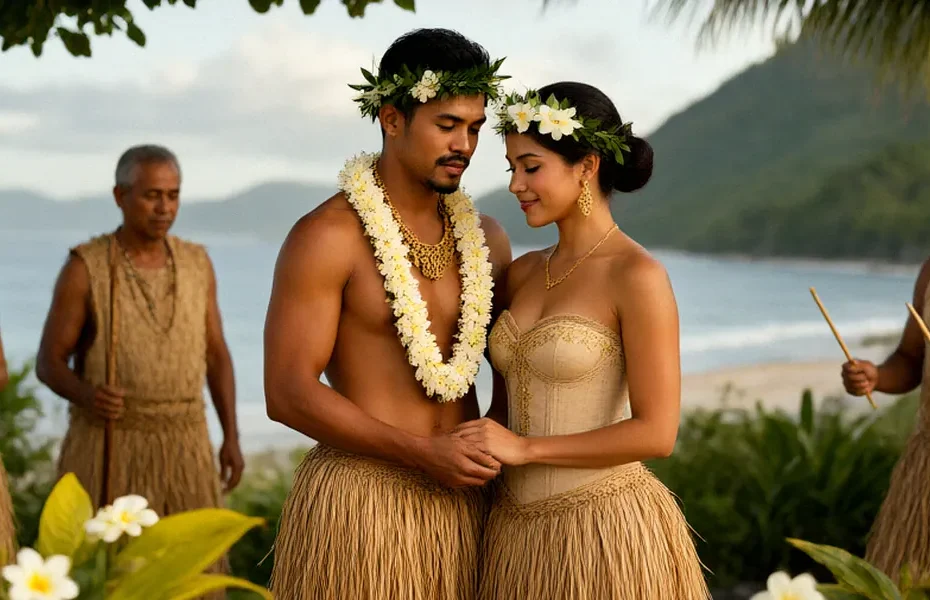
The sun drops behind Mount Otemanu and the lagoon turns the colour of liquid gold. On a small motu ringed by ironwood trees, a conch shell sounds across the water, and a tahu’a in a pandanus skirt begins to chant in Tahitian. If you are an Australian couple dreaming of a South Pacific wedding, this is the moment we want you to picture. We believe a traditional Polynesian ceremony offers something a standard resort vow renewal simply cannot: a genuine connection to the culture of French Polynesia, not just a pretty backdrop. Here is everything you need to know before you book.
Why a Traditional Polynesian Wedding Ceremony Is Different
These ceremonies are rooted in Maori and Tahitian traditions that predate European contact by centuries. The words, the symbols, and the order of rituals have been passed down through families and cultural practitioners, not invented by a hotel marketing department. That distinction matters. Many Australian couples choose Bora Bora for their wedding precisely because it is reachable — a direct flight from Sydney to Papeete via Auckland with Air Tahiti Nui puts you in French Polynesia in around 8 hours of flying time, with connections from Brisbane and Melbourne through Auckland as well.
The Role of the Tahu’a (Traditional Priest)
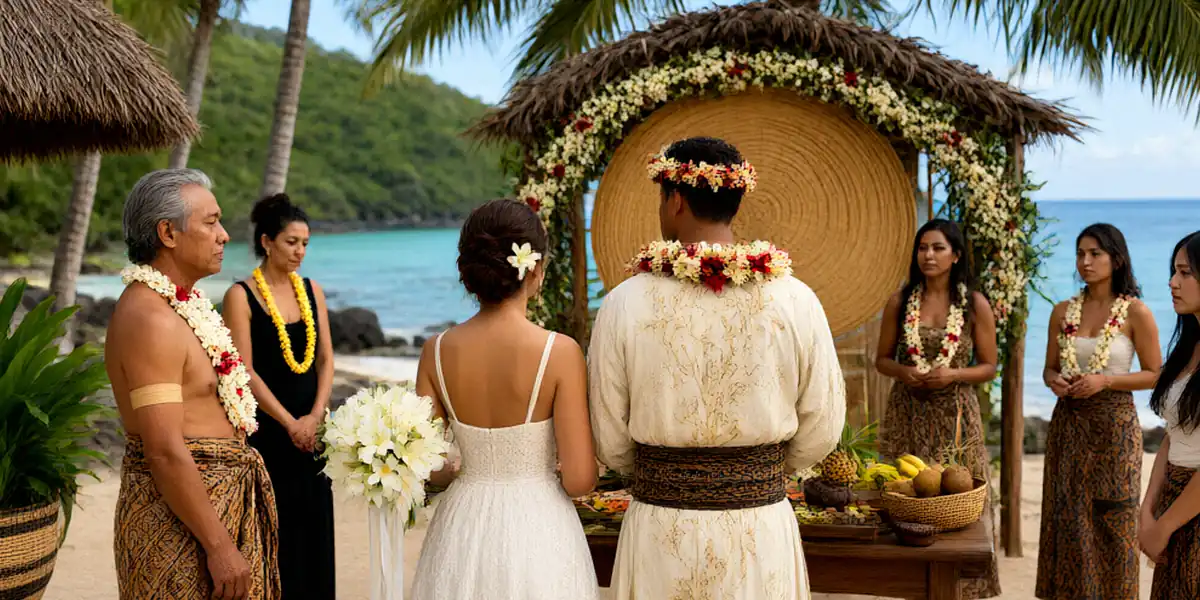
The tahu’a leads the ceremony and gives it its spiritual weight. This is not a celebrant reading a script; the tahu’a recites ancestral blessings, calls on the gods and ancestors of the land, and binds the couple in the presence of the lagoon itself. A good tahu’a will meet you beforehand, explain each step, and ask about your own family background so the ceremony can acknowledge both your Australian heritage and the Polynesian world you are stepping into.
How It Differs from a Western Vow Renewal
A resort vow renewal is essentially a photo opportunity with a minister. A traditional Polynesian ceremony is participatory — you will be wrapped, bound, blessed, sung to, and expected to take part. There is no rehearsal dinner equivalent and no bridal march. Instead, there is chanting, drumming, and a sequence of rituals that have meaning to the people performing them. We always tell couples: come as guests, not as spectators.
Key Rituals and Symbols in a Polynesian Wedding
While specific ceremonies vary between families and islands, most authentic Polynesian weddings in Bora Bora share a core set of elements. Here are the ones you are most likely to experience.
- Tapa cloth — beaten bark cloth used to wrap the couple’s hands or drape the altar
- Lei exchange — flower garlands given between the couple and their families
- ‘Ahu sennit binding — braided coconut fibre used to symbolically tie the couple together
- Umu tiare — the traditional flower crown worn by the bride
- Conch shell blast — sounded to announce the union and call the ancestors
- Tahitian hymns — sung by a small choir or the couple’s family
The Tapa Cloth and Its Ancestral Meaning
Tapa is made by beating the inner bark of the paper mulberry tree until it becomes a soft, pliable cloth. In old Polynesia it was used for clothing, bedding, and ceremonial wrapping. When the tahu’a wraps your joined hands in tapa, the gesture represents the joining of two family lines into one — and the cloth itself carries the labour and care of the women who made it.
Lei Exchange and the Binding of Hands
The lei is more than a flower necklace. Each flower has a meaning, and the exchange between families is a formal gesture of welcome and acceptance. The binding with ‘ahu sennit — braided coconut fibre cord — follows the lei exchange and is the emotional peak of the ceremony for most couples. You are literally tied together while the tahu’a speaks blessings over you.
Traditional Music and Dance
Expect a pahu drum, a ukulele, and voices. Many ceremonies include a short hīmene (hymn) and, in larger ceremonies, a tamure or aparima dance performed by family members or a local troupe. This is not a floor show — the dance is an offering, and we encourage guests to watch with respect rather than treat it as entertainment.
Where to Experience an Authentic Ceremony in Bora Bora
Bora Bora has a small number of venues that do traditional ceremonies well. We have worked with all of the following and can recommend them based on what kind of experience you want.
Luxury Resort Ceremonies
The St. Regis Bora Bora and Four Seasons Resort Bora Bora both offer traditional Polynesian ceremonies on their private motus, with a tahu’a, dancers, and a full ritual program. The InterContinental Bora Bora Thalasso Spa also runs a well-regarded ceremony on its lagoon-side terrace. These packages are polished, photogenic, and convenient — but they are also the most expensive option.
Community-Run Motu Ceremonies
On the eastern side of the lagoon, several family-run motus host ceremonies that are smaller, cheaper, and often more culturally rich. You will typically be the only couple that day, the tahu’a will be a local elder, and the meal afterwards will be a proper Polynesian spread cooked in an earth oven. We book these for couples who want authenticity over amenities.
Legal vs. Symbolic Ceremonies
Most traditional Polynesian ceremonies in Bora Bora are symbolic only. To be legally married in French Polynesia, you must complete paperwork through the local commune and typically have a civil ceremony at the town hall in Vaitape first. Many Australian couples do the civil ceremony at home before flying, then treat the Polynesian ceremony as the emotional and spiritual wedding. We can walk you through both paths.
Planning Tips for Australian Couples
Timing, paperwork, and logistics are where most couples get stuck. Here is what we tell our Australian clients.
Best Season and Weather
The best time to visit is May to October, which is the dry season in French Polynesia. You get lower humidity, calmer lagoon conditions, and reliable sunshine. July and August are peak — book at least 9 to 12 months ahead if you want a specific date. The wet season from November to April is cheaper but brings afternoon downpours and higher cyclone risk.
Legal Requirements for Australians
For a legal marriage in French Polynesia you will need:
- Valid passports with at least 6 months’ validity
- Original birth certificates (translated into French if not already)
- Certificates of no impediment issued in Australia
- Proof of residence in French Polynesia (usually arranged by your resort)
- Publication of banns at the Vaitape town hall at least 30 days before
Start the paperwork at least 3 months out. Your resort’s wedding coordinator will usually handle the local filings for a fee.
Combining with Lagoon Tours and Snorkelling
Most couples we work with add a lagoon tour and snorkelling trip to their wedding week. The classic Bora Bora lagoon tour includes a stop to snorkel with manta rays and blacktip reef sharks, plus a motu picnic. Jetstar and Air Tahiti Nui both offer routes from Sydney and Auckland, so it is easy to build a 7 to 10 day trip around the ceremony.
Respecting Polynesian Culture: Do’s and Don’ts
We ask every couple to treat the ceremony as a living tradition, not a performance. A few simple courtesies go a long way.
Sacred Sites and Marae Etiquette
Never touch or climb on marae stones — these are ancestral temples, and many are still actively used. Walk around them, not over them. Ask before entering any site marked as private or tapu.
Dress Code and Offerings
Wear light, modest clothing for the ceremony itself. White is traditional for brides, but floral prints and pareu are also welcome. Bringing a small offering — fresh fruit, flowers, or a woven mat — is appreciated by the tahu’a and the family hosting you.
Supporting Local Artisans
Buy your lei, pareu, and tapa from local markets in Vaitape rather than imported resort gift shops. Learn a few Tahitian greetings: Ia ora na (hello) and Mauruuru (thank you). Ask permission before photographing locals, especially children and elders.
Costs and What to Expect
Symbolic ceremonies start around AUD 1,500 for a small family-run motu ceremony with a tahu’a, basic flowers, and a short ritual. Resort ceremonies at the St. Regis or Four Seasons typically range from AUD 3,000 to AUD 5,000 and up. Legal ceremonies add several hundred dollars in administrative fees and translation costs.
Package Inclusions and Extras
Most packages include the tahu’a, flowers, a photographer for one hour, and a small cake or champagne toast. Extras to budget for: a private lagoon tour with snorkelling, a Polynesian dance troupe, a videographer, and a sunset dinner on the motu. Many resorts bundle a private lagoon tour and snorkelling with rays and sharks into the wedding package — ask before you book separately.
Tipping and Local Customs
Tipping is not customary in French Polynesia, but it is appreciated for exceptional service. A gratuity of 5,000 to 10,000 XPF (roughly AUD 70 to AUD 140) for the tahu’a and ceremony team is a generous gesture. Cash in local currency is best.
FAQ
Can we have a traditional Polynesian wedding if we are already legally married in Australia?
Yes. The vast majority of our Australian clients are already legally married at home and treat the Bora Bora ceremony as a symbolic blessing and cultural celebration. The tahu’a will still perform the full ritual — the only difference is that no civil paperwork is filed.
How far in advance should we book?
For May to October dates, we recommend booking 9 to 12 months ahead, especially for resort ceremonies at the St. Regis or Four Seasons. Family-run motu ceremonies can sometimes be arranged with 3 to 4 months’ notice.
Do we need to speak French or Tahitian?
No. The tahu’a and resort coordinators work in English, and the ceremony itself is conducted in Tahitian with English translation. Learning a few words like Ia ora na and Mauruuru is a nice touch but not required.
What should we wear?
Light, breathable fabrics in white, cream, or floral prints work best. Brides often wear a white dress with a flower crown; grooms typically wear a linen shirt and pareu. Bare feet are common and appropriate on the motu.
Can our children or family attend?
Absolutely. Family participation is central to Polynesian ceremony, and children are warmly welcomed. Just let the coordinator know numbers in advance so seating, leis, and the meal can be arranged.
A traditional Polynesian wedding in Bora Bora is more than a ceremony — it is a cultural immersion that Australian couples remember long after the lagoon tour ends. From the conch shell blast at sunset to the binding of hands in ‘ahu sennit, every element carries meaning that stretches back centuries. If you are planning a South Pacific wedding, we would love to help you find the right tahu’a, the right motu, and the right moment.