The Meaning of Mā’ohi: Understanding Polynesian Identity in Bora Bora
You step off the boat at a motu — a small islet ringed by white sand and shallow turquoise water — and your guide welcomes you with a phrase you don’t quite catch. Someone nearby says it again: Mā’ohi. It comes up in songs, on tattoos, in the names of tour companies, in the way people introduce themselves. For most Australian travellers, it’s a new word. But by the end of a week in Bora Bora, it’s the word that makes sense of everything else — the dancing, the canoe races, the way guides read the lagoon like a map. So what does Mā’ohi actually mean, and why does it matter for your holiday?
What Does Mā’ohi Actually Mean?
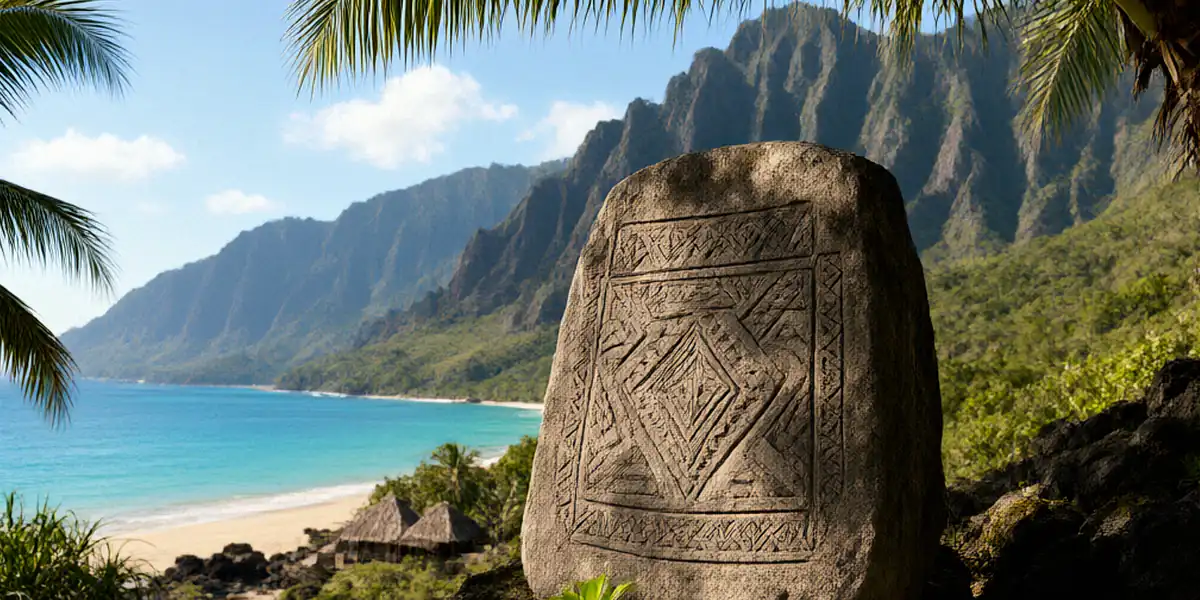
Mā’ohi refers to the Indigenous Polynesian people of French Polynesia — and to their culture, language, and way of life. It’s an identity term, closer to ‘First Nations’ or ‘Tangata Whenua’ in the way it’s used than to a simple geographic label. When someone in Bora Bora describes themselves as Mā’ohi, they’re connecting themselves to ancestors who navigated the Pacific centuries before European arrival, and to a living culture that continues today.
The Literal Translation and Its Roots
The word is often translated as ‘native’ or ‘authentic’, but that undersells it. Mā carries connotations of clarity, truth, and purity; ‘ohi relates to the people or lineage. Put together, Mā’ohi signals something genuine and rooted — a person or practice that belongs to this place and its ancestry rather than to a colonial overlay. The Mā’ohi language (also called Tahitian, or Reo Tahiti) belongs to the broader Polynesian family, which includes Māori, Samoan, Hawaiian, and Tongan — a connection Australian travellers often notice quickly, since many Tahitian words sound familiar to anyone who’s spent time in New Zealand.
Mā’ohi vs. ‘Tahitian’: Why the Distinction Matters
‘Tahitian’ is a colonial-era label. It groups everyone in French Polynesia under the name of one island group — the Society Islands, of which Tahiti is the largest — even though the territory spans five archipelagos and dozens of distinct island cultures, from the Marquesas to the Tuamotus. Mā’ohi is the term people use for themselves. Making the switch is a small gesture, but it signals that you understand French Polynesia as a place with its own history and identity, not just a French outpost in the Pacific. You’ll hear it everywhere once you start listening: in the names of dance troupes, in the phrase fenua Mā’ohi (the Mā’ohi homeland), and in everyday conversation.
Mā’ohi Culture: More Than a Word
Mā’ohi culture isn’t a museum piece. It’s practised daily — in dance rehearsals, in tattoo studios, in the resurgence of the Tahitian language in schools, and in the concept of mana, a spiritual force or life energy that can reside in people, places, and objects. For visitors, the most visible expressions are dance, music, tattooing, and sport — especially outrigger canoe racing, which is a serious competitive pursuit across French Polynesia.
Dance, Music, and the Heiva i Tahiti Festival
The Heiva i Tahiti is an annual cultural festival in Papeete celebrating Mā’ohi dance, music, and traditional sports. It runs for several weeks around June and July and is the single best window into contemporary Mā’ohi performance culture — ori Tahiti dance competitions, choral singing, and events like stone lifting and coconut husking. If your travel dates overlap with Heiva, it’s worth building your itinerary around it. Even outside the festival, most Bora Bora resorts and tour operators host smaller dance and music performances that give you a taste of the real thing.
Tattoo, Language, and the Concept of Mana
Tattooing in French Polynesia is not decorative. Traditional tatau marked genealogy, status, and life milestones, and the art form was suppressed by missionaries before being revived in the late twentieth century. Today, Mā’ohi tattoo artists in Bora Bora and Papeete work with motifs that carry specific meanings — a ray, a turtle, a row of triangles — and getting one is a serious undertaking, not a souvenir. Language is another pillar: Reo Tahiti is taught in schools and used in radio and television, and even a handful of phrases will change how you’re received. Underneath all of it sits mana — the idea that respect, generosity, and connection to ancestors and land carry real spiritual weight.
How Mā’ohi Identity Shapes Bora Bora Lagoon Tours
This is where Mā’ohi culture becomes something you can actually experience, rather than just read about. The best Bora Bora lagoon tours are led by guides who grew up on the water and who bring Mā’ohi knowledge — of tides, of fish behaviour, of which motu belongs to which family — into every stop. Operators like Lagoon Service Bora Bora, a locally owned company, are known for Mā’ohi-guided snorkelling and motu picnics, and Reef Discovery runs small-group lagoon tours with a strong emphasis on interpretation rather than just transport.
Snorkelling with Sharks and Rays: A Mā’ohi Perspective
Snorkelling with blacktip reef sharks and stingrays is one of the signature experiences of a Bora Bora lagoon tour. From a Mā’ohi perspective, these animals are not attractions — they’re part of a system that has been managed and respected for generations. Guides will often explain the role of rays and sharks in the lagoon’s health, and why certain areas are fished and others are left alone. It’s a different framing from the adrenaline-first approach you’ll find in some other Pacific destinations, and it makes the experience richer.
Motu Picnics and Traditional Outrigger Canoe Tours
The motu picnic is the centrepiece of most full-day lagoon tours: fresh poisson cru (raw fish in coconut milk and lime), grilled fish, tropical fruit, and a few hours on a private islet. Many operators now run these picnics alongside traditional outrigger canoe segments, so you spend part of the day under sail or paddle rather than motor. If you want the most authentic version, ask your operator whether the picnic is prepared by a Mā’ohi family and whether the canoe portion is included — it’s usually the difference between a good tour and a memorable one.
Mā’ohi and the Environment: Guardians of the Lagoon
The Bora Bora lagoon is one of the most beautiful and most fragile environments in the Pacific. Coral bleaching, rising water temperatures, and pressure from tourism all threaten it. Mā’ohi communities have been managing this kind of pressure for centuries, and their traditional practices are increasingly being folded into modern conservation policy across French Polynesia.
Rahui: Traditional Marine Protection
Rahui is a traditional Polynesian marine protection practice that restricts fishing in certain lagoon areas to allow regeneration. It’s typically declared by a community or a chief, and it can be temporary or long-term. In recent years, rahui has been formalised in some parts of French Polynesia as a co-management tool between local communities and government — a rare example of Indigenous knowledge being treated as science rather than folklore. When your guide points to a stretch of lagoon and says it’s under rahui, that’s what they mean.
What Australian Travellers Can Learn from Mā’ohi Stewardship
Australians already have strong cultural reference points for this — Indigenous land and sea management, including fire-stick farming and seasonal fishing closures, operates on similar principles. The Mā’ohi approach to the lagoon is a reminder that conservation isn’t only a Western scientific project. It’s also a matter of relationship, obligation, and long memory. Practically, that means:
- Don’t stand on coral, and don’t chase or touch marine life — including rays and sharks.
- Choose reef-safe sunscreen and avoid single-use plastics on the water.
- Ask your guide which areas are under rahui and respect the boundaries.
- Prefer small-group tours over large-boat operations that crowd the same sites.
Experiencing Mā’ohi Culture as an Australian Traveller
Getting to Bora Bora from Australia usually means flying to Auckland first. Air Tahiti Nui operates direct flights from Auckland to Papeete, a popular route for Australian travellers connecting to Bora Bora, and from Papeete you’ll take a short domestic flight to Bora Bora’s own airport on a motu. Once you’re there, a little preparation goes a long way toward making your visit a genuine exchange rather than a transaction.
Learning Basic Tahitian Phrases
You don’t need to be fluent. A few phrases, used sincerely, will open doors:
- Ia ora na — hello
- Māuruuru — thank you
- Nana — goodbye
- ‘E aha te huru? — how are you?
- Maita’i — good, I’m well
Note how close these are to Māori and Hawaiian — ia ora na sits right next to kia ora, and māuruuru echoes mālō. It’s a small reminder of how connected the Polynesian world is, and it’s a genuine conversation starter with guides.
Supporting Locally Owned Bora Bora Tours
Where your money goes matters. Locally owned operators tend to employ Mā’ohi guides, source food from local families, and reinvest in the community. The Bora Bora Cultural Center (Fare Pote’e) showcases traditional Polynesian artefacts and history, and is a good first stop — it gives context to everything you’ll see on the water afterwards. Pair a visit there with a locally run lagoon tour and you’ll come away with a much fuller picture of the island than a resort-only stay provides.
FAQ
What does Mā’ohi mean in English?
Mā’ohi refers to the Indigenous Polynesian people, culture, and language of French Polynesia. It’s an identity term rather than a geographic one, and it’s the word Mā’ohi people use for themselves — as opposed to the colonial-era label ‘Tahitian’.
Is it offensive to say ‘Tahitian’ instead of Mā’ohi?
Not offensive, but less accurate. ‘Tahitian’ flattens dozens of distinct island cultures across five archipelagos into one label. Using Mā’ohi shows awareness of that distinction, and locals generally appreciate the effort.
What is rahui and how does it affect Bora Bora lagoon tours?
Rahui is a traditional Polynesian marine protection practice that restricts fishing in certain lagoon areas to allow regeneration. On a lagoon tour, you may be asked to avoid certain zones — this is a conservation measure, not a restriction on your enjoyment, and respecting it directly supports the lagoon’s health.
Do I need to speak French or Tahitian to enjoy Bora Bora?
No. English is widely spoken in tourism, and French is the official language. But learning a few Reo Tahiti phrases like ia ora na and māuruuru goes a long way with local guides and hosts.
How do Australian travellers get to Bora Bora?
Most Australians fly to Auckland, then take a direct Air Tahiti Nui flight from Auckland to Papeete, followed by a short domestic flight to Bora Bora. It’s a well-trodden route and easy to book as a single itinerary through a travel agent or directly with the airlines.
Understanding Mā’ohi turns a Bora Bora holiday from a beach escape into something you carry home. The lagoon is the headline — and it deserves every bit of the hype — but the culture underneath it is what makes the place stick. Learn a few words, choose locally owned tours, respect the rahui, and you’ll leave with more than a tan.